If you are new to martial arts, one of the first questions you will probably ask is:
“What’s the difference between karate and taekwondo?”
When you first explore martial arts, karate and taekwondo can look quite similar. Both involve uniforms, belt ranks, kicks, punches, and organized classes. You may see students practicing movements together, listening to an instructor, or working with partners and wonder what actually makes one martial art different from the other.
The most noticeable difference is often the emphasis placed on particular techniques. Karate generally includes a broad combination of hand strikes, blocks, kicks, and stances, while taekwondo is especially recognized for its kicking techniques. However, these are broad descriptions. The style, instructor, curriculum, and purpose of a particular school can make a considerable difference to what students practice.
For beginners and families in St. Augustine, Florida, the decision involves more than choosing which movements look interesting. You also want a class where instruction is clear, expectations are appropriate, and students feel encouraged to learn. Understanding the similarities and differences can help you compare programs with a clearer idea of what matters to you.
What Beginners Usually Want From Martial Arts
Most beginners arrive with practical goals. Adults may want an engaging way to stay active, learn self-defense skills, or try something they have been curious about for years. Parents may be looking for a class where their child can practice listening, develop confidence, and enjoy working toward a goal.
Both karate and taekwondo can provide opportunities to learn physical skills within a structured environment. Students follow instructions, repeat techniques, receive feedback, and work toward progression requirements. The quality of those experiences depends heavily on how the instructor teaches and supports the group.
Before comparing styles, think about what would make training worthwhile for you or your child. Someone interested in kicking techniques may be drawn to taekwondo, while another person may prefer the particular combination of movements taught in a karate class. Your interests provide a starting point, and observing a lesson helps you see how those interests connect with everyday practice.
How Karate and Taekwondo Differ in Their Techniques
Karate training commonly involves punches, blocks, kicks, and footwork, with attention to stance, balance, and control. Students learn individual movements and then practice combining them. Depending on the school, training may include basics, kata, partner drills, conditioning, and sparring, with different amounts of time devoted to each.
Taekwondo also includes hand techniques, stances, forms, and partner practice, but kicking often occupies a more prominent role. Students may develop a wide range of kicks alongside the footwork and positioning needed to use them. Advanced demonstrations can include jumping or spinning techniques, although beginner instruction starts with movements appropriate to the student’s experience.
These differences don’t mean karate lacks demanding kicks or that taekwondo overlooks fundamentals. Both require careful practice and coordination. When comparing schools, ask what beginners learn during their first few months rather than judging the entire experience by an advanced demonstration or competition video.
What a Beginner Karate Class Can Feel Like
A beginner karate class introduces movements that may initially feel unfamiliar. You might learn how to position your feet, maintain a stance, perform a basic strike, or move without losing your balance. Your instructor demonstrates the technique, observes your attempt, and provides corrections that help you understand what to change.
Repetition is an important part of this process. A movement may seem straightforward when you watch it but require several attempts before your body follows the instruction comfortably. Over time, you begin recognizing details that were difficult to notice at first, such as whether your posture changes during a turn or your feet finish in the intended position.
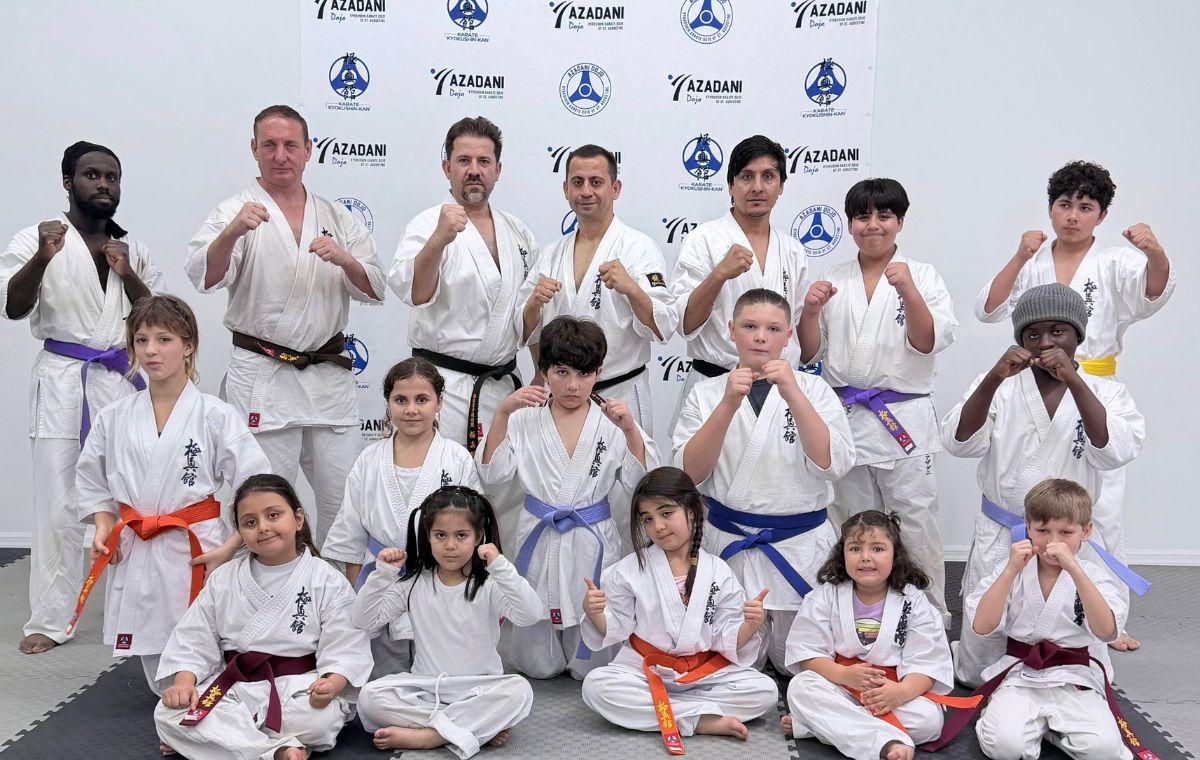
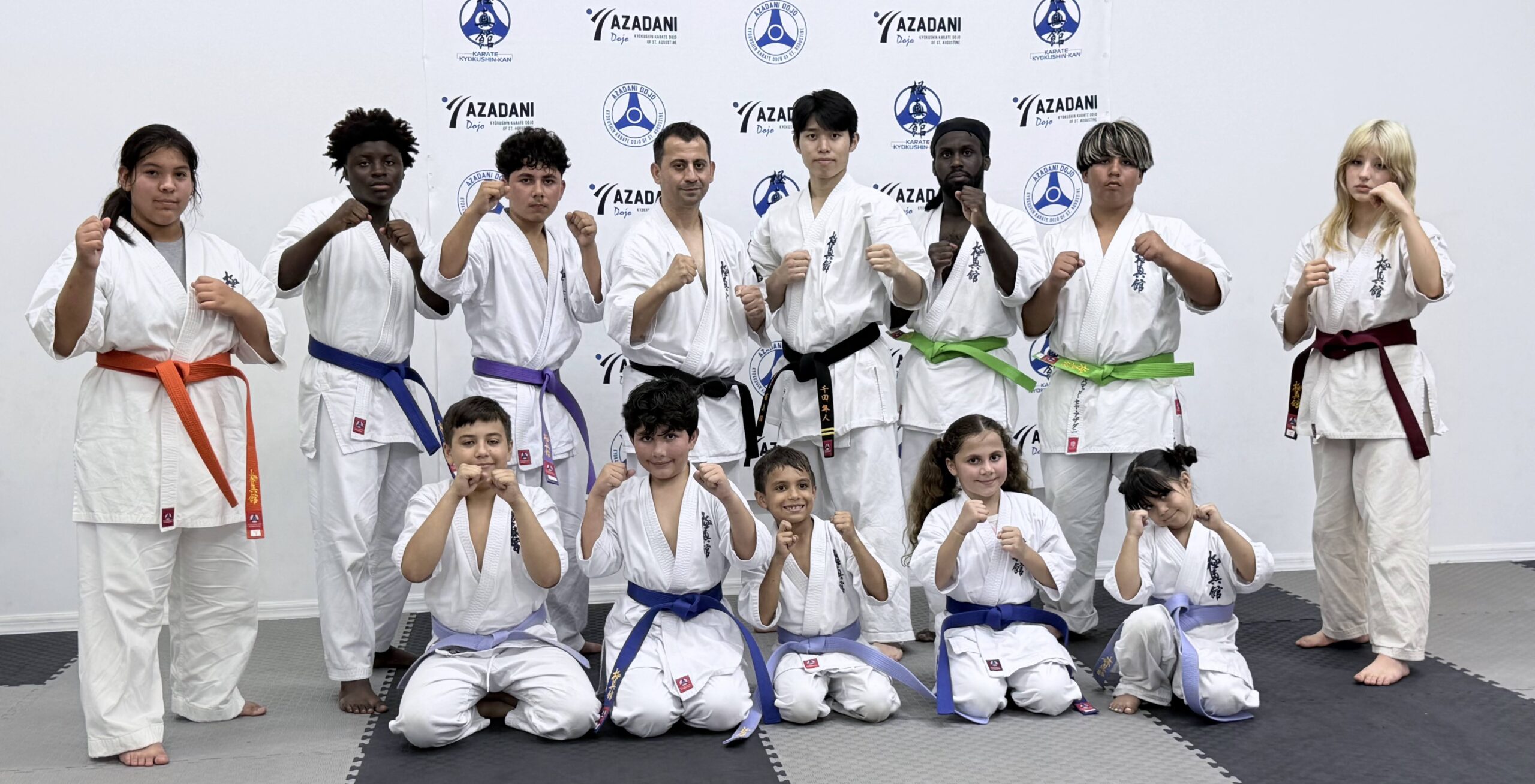
At Azadani Dojo in St. Augustine, beginners can approach karate through this gradual development of fundamentals. You don’t need to arrive knowing the terminology or performing the movements correctly. Asking questions and learning to apply feedback are part of becoming familiar with the class.
What to Expect From Beginner Taekwondo Training
Taekwondo’s kicking techniques can be particularly appealing to someone who enjoys learning how to coordinate movement and balance. Beginner lessons may involve practicing a kick in stages, understanding how to pivot, and learning to return to a stable position. These foundations support more complex movements as students gain experience.
Watching skilled practitioners perform high or spinning kicks can make taekwondo look inaccessible to a newcomer. However, an advanced demonstration doesn’t represent what a beginner should be expected to do. A suitable introductory program teaches basic control and positioning before asking students to attempt more demanding skills.
The pace and intensity vary between schools. Some programs devote considerable attention to sport competition, while others place more emphasis on forms, general training, or other parts of their curriculum. Asking how beginner classes are organized will give you a more useful picture than assuming every taekwondo school follows the same approach.
Which Is Easier for a Beginner?
Neither martial art is automatically easier to learn. A student may find certain karate movements more intuitive while enjoying the kicking practice in taekwondo, or the opposite may be true. Your previous activity experience, coordination, preferences, and the way instructions are explained can all affect those early impressions.
A helpful beginner class breaks techniques into manageable parts. The instructor gives students time to practice, offers specific corrections, and explains how to approach a movement that feels difficult. That teaching approach matters more than whether the class is labeled karate or taekwondo.
You also don’t need to judge your suitability after one awkward attempt. Learning to coordinate unfamiliar movements takes time. During a trial class, focus on whether you understand the guidance, feel comfortable asking questions, and remain interested in trying again.
Which Martial Art Is Better for Self-Defense?
Both karate and taekwondo can include skills relevant to self-defense, but the name of the martial art doesn’t tell you everything about the training. A school’s curriculum, partner practice, and approach to realistic situations matter more than a general claim that one style is better.
If self-defense is a priority, ask how the school teaches awareness, distance, avoiding confrontation, and finding opportunities to leave an unsafe situation. Also ask how students practice with partners and how the instructor introduces increasing difficulty while maintaining supervision and control.
Sport competition and self-defense have different purposes. Competition takes place within rules, while real situations don’t follow an agreed format. A clear explanation of those differences is more useful than promises that a particular technique or belt rank will guarantee someone’s safety.
Which Is a Better Fit for Children?
Children can enjoy either karate or taekwondo, and their preferences are not always predictable. A quiet child may love kicking drills, while an energetic child may become deeply interested in practicing a karate kata. Personality can help you understand how a child approaches a new activity, but it shouldn’t determine their options before they have tried them.
Observe how the instructor keeps children engaged and helps them through mistakes. Clear routines, age-appropriate explanations, and respectful corrections can support learning in either martial art. It also matters whether your child finds the activities interesting enough to want to practice them again.
At Azadani Dojo, families can explore karate as an activity that combines physical practice with expectations around attention, effort, and respectful behavior. If you’re comparing martial arts with other options as well, our article on karate vs team sports discusses additional points parents may want to consider.
Discipline and Focus Depend on Daily Practice
Discipline is part of both karate and taekwondo, but it is most useful to look at what that means during a lesson. Students may be expected to listen while a technique is explained, wait for a signal before beginning, and practice with appropriate control. These expectations become meaningful when instructors explain them clearly and reinforce them consistently.
In karate, repeating a technique gives students opportunities to concentrate on a particular detail. A child might work on keeping their stance steady or remembering the order of a short sequence. Specific feedback helps them understand where to direct their attention and gives them something achievable to practice.
Changes outside class vary between children and shouldn’t be assumed to happen automatically. Parents can encourage useful habits by recognizing effort and asking what their child learned. Our article on how karate helps kids explores the connection between training, attention, and focus in school.
Confidence Grows Through Learning and Progress
Both martial arts offer opportunities for students to recognize improvement. Remembering a form, performing a technique with greater control, or completing a grading requirement can provide a sense of achievement. Those moments are meaningful because the student can connect their practice with something they are now able to do.
The instructor’s response to difficulty is important too. Students need guidance when progress feels slow, along with expectations that reflect their experience. A class that recognizes steady effort can help beginners stay engaged while they work through skills that don’t come naturally.
There is no reason to assume confidence developed in one martial art is more lasting than confidence developed in another. The learning environment and the student’s experience matter. For a closer look at how this process can work in karate, read our article on how karate builds mental toughness.
Adults Can Begin Either Martial Art
Adults can start karate or taekwondo without previous martial arts training. The most useful starting point is a conversation about your goals, current activity level, and any limitations that may affect participation. This helps you understand whether the class and its expectations are suitable.
Some adults are drawn to karate’s particular combination of techniques and traditional practice. Others are excited by taekwondo’s emphasis on kicking. Either interest can provide motivation, but practical details such as class times, travel, cost, and the instructor’s teaching style will also influence whether training fits your life.
Try to choose an experience you want to return to rather than an impressive-looking program that feels difficult to attend. Consistency becomes more manageable when the schedule works and the lessons hold your interest. Your preferences may become clearer after observing or participating in a class.
What to Look for in a Martial Arts School in St. Augustine
A school visit gives you a chance to evaluate the details that broad comparisons cannot show. Watch how the instructor introduces a task, responds to questions, and helps students who need another explanation. Notice whether beginners understand what they are expected to do and whether partner exercises are supervised appropriately.
Ask about the curriculum, grading process, contact rules, protective equipment, and the role of competition. You should also understand the full costs and attendance expectations before enrolling. Clear answers make it easier to compare schools and avoid surprises later.
At Azadani Dojo, families and adult beginners can ask about the approach to Kyokushin karate and how new students begin training. If you’re comparing local programs, our guide to choosing a karate school in St. Augustine explains what to consider during your research and visits.
Choosing the Martial Art You Want to Keep Learning
Karate and taekwondo have distinct technical traditions, but they also share many features that appeal to beginners: structured practice, opportunities for progression, and the experience of learning alongside others. Your decision becomes easier when you connect those features with the actual classes available to you.
Pay attention to what interests you, how the instructor teaches, and whether the environment feels suitable for your goals. For a child, include their reaction in the decision and give them room to explain what they enjoyed or found difficult. A useful first experience should help you understand the program more clearly, even if you still have questions.
To explore training at Azadani Dojo, visit our karate classes in St. Augustine. Learning how the programs are organized can help you decide whether karate is the right place for you or your child to begin.