“Why can’t my child focus?”
It’s a question many parents quietly ask themselves. Sometimes it shows up during homework time. Sometimes a teacher mentions it during a meeting. Other times, it’s simply the feeling that your child has potential but struggles to stay on track.
If you’re a parent in St. Augustine, FL exploring solutions, you may have come across karate and wondered, can this really help with focus and attention?
The answer is yes, it can. But not in the way most people expect.
Karate is not just about movement or self-defense. At its core, it is a structured system that teaches children how to control their attention, their behavior, and their reactions. Over time, these skills naturally carry into school and everyday life.
This article will help you understand why karate works, what kind of changes to expect, and how to recognize a program that truly supports your child’s growth.
If you are exploring whether karate is the right choice overall, you may also want to read Is Karate Good for Kids.
Why Focus Is So Challenging for Many Kids Today
Children today are growing up in a world full of distractions. Fast-moving content, constant stimulation, and limited structured movement all play a role in making sustained focus more difficult.
For many kids, the issue is not a lack of intelligence or ability. It is a lack of structured environments that consistently train attention and self-control.
In school, they are expected to sit still, listen carefully, and follow multi-step instructions. For some children, especially those with high energy or ADHD tendencies, this can feel overwhelming.
This is where the right kind of activity can make a meaningful difference.
Why Karate Is Different From Other Activities
Many activities keep kids busy. Karate teaches them how to be focused.
When a child walks into a karate class, they are entering an environment built on structure, routine, and expectation. They are not just moving. They are listening, observing, responding, and adjusting.
Every moment in class requires attention. When the instructor speaks, students must listen. When a movement is demonstrated, they must watch carefully. When it is time to practice, they must repeat the technique with intention.
This constant cycle of listening, observing, and doing trains the brain in a way that few activities do.
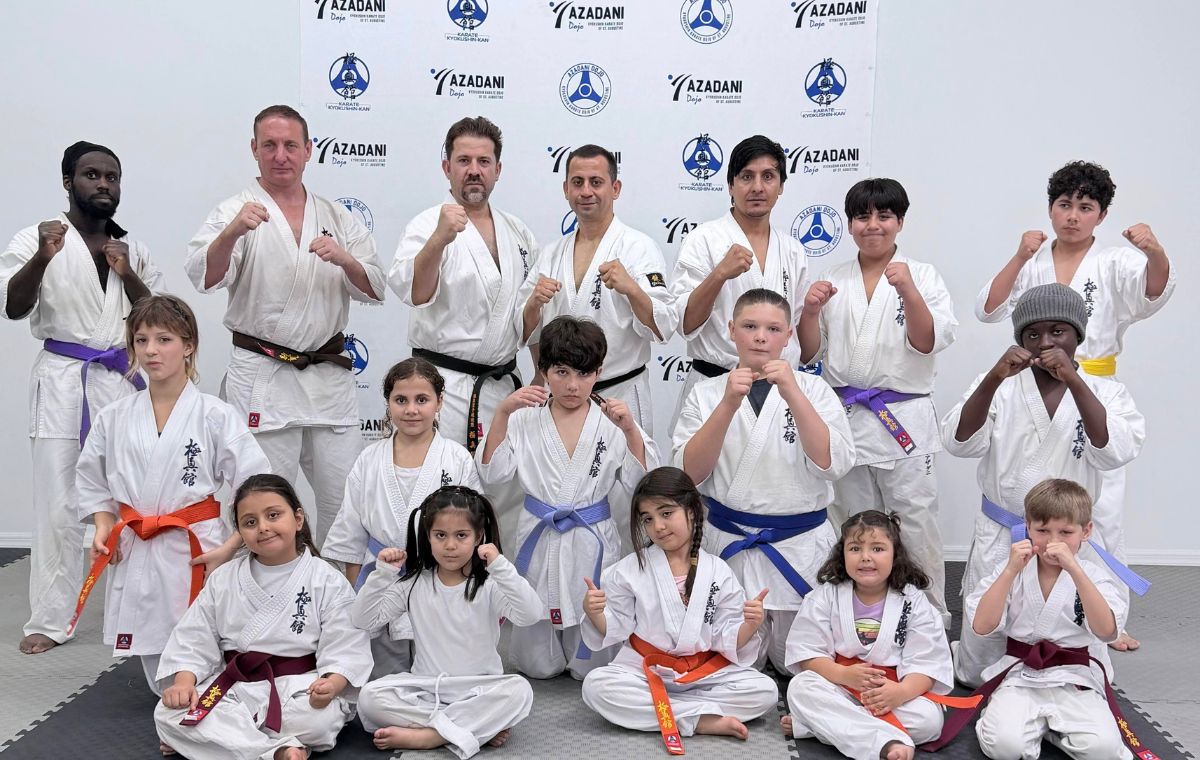
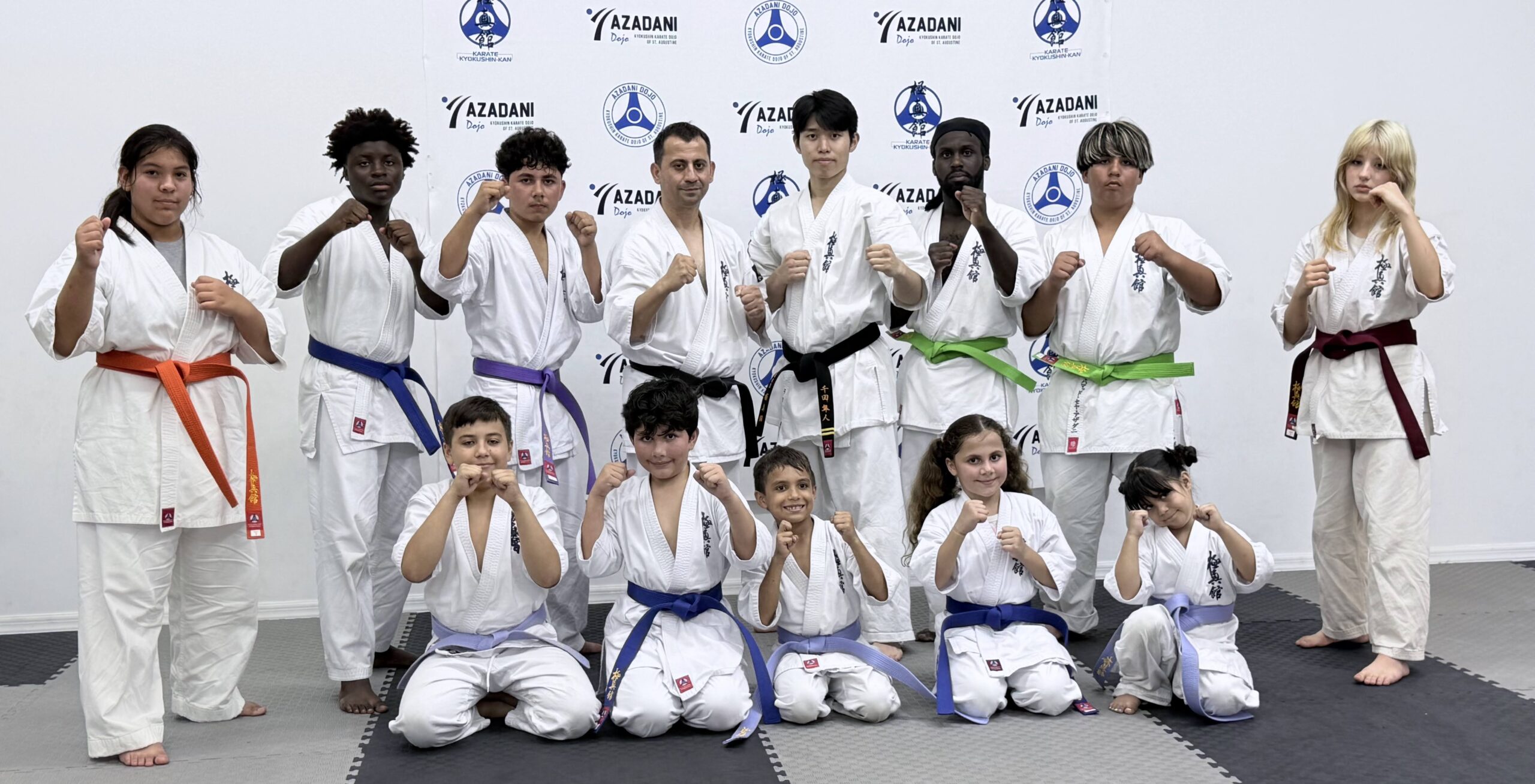
At Azadani Dojo in St. Augustine, this structure is not accidental. It is intentional. Classes are designed to help children gradually improve their ability to focus without feeling pressured or overwhelmed.
To better understand how classes are organized, you can explore our karate classes in St. Augustine.
How Karate Trains Attention Without Kids Realizing It
One of the most powerful aspects of karate is that children improve their focus without feeling like they are being forced to.
Instead of being told to “pay attention,” they are placed in an environment where attention is naturally required.
They learn to:
Stay in line and be ready
Listen for instructions before moving
Follow sequences step by step
Wait for their turn without interrupting
Correct mistakes by observing and adjusting
These behaviors are practiced repeatedly, class after class. Over time, they become habits.
The same child who struggles to sit still in school may begin to show longer periods of focus, simply because their brain has been trained to handle structure.
The Connection Between Movement and Focus
Many parents assume that children need to be still in order to focus. In reality, movement can be the key to improving attention.
Karate provides controlled, purposeful movement. It allows children to release energy while still requiring discipline and awareness.
After moving their bodies, children often feel more regulated. Their minds become calmer, and their ability to concentrate improves.
This is one of the reasons parents often notice a difference after class. Children may seem more settled, more attentive, and more balanced.
What About Kids With ADHD or High Energy?
This is one of the biggest reasons parents explore karate.
While karate is not a medical treatment, it can be incredibly supportive for children who struggle with attention or impulse control.
Karate offers what many of these children need most. Clear expectations. Consistent routines. Immediate feedback. A structured environment where effort is recognized and progress is visible.
Instead of being told what they are doing wrong, they are guided toward what they can do better.
Over time, many children begin to develop stronger self-control. They learn to pause before reacting, to listen before acting, and to stay engaged for longer periods.
Parents often describe changes like improved listening at home, fewer interruptions, and better behavior in school settings.Many parents also ask about the right starting age, which you can explore in this guide on the best age to start karate in St. Augustine.
Discipline That Builds Focus, Not Fear
Discipline in karate is very different from punishment.
It is not about strictness or pressure. It is about consistency.
Children learn that there is a right time to move, a right time to listen, and a right way to behave. These expectations are reinforced through repetition, not fear.
This kind of discipline builds internal control. Instead of relying on constant reminders, children begin to regulate themselves.
That shift is what supports better focus in school. When a child learns to control their actions in karate, they begin to apply the same control in other environments.
Confidence Plays a Bigger Role Than You Think
Focus is not just about attention. It is also about confidence.
A child who feels unsure or frustrated is more likely to disengage. A child who feels capable is more likely to stay involved.
Karate builds confidence through small, consistent wins. Learning a new technique, improving balance, or receiving recognition for effort all contribute to a stronger sense of self.
As confidence grows, children become more willing to try, to listen, and to persist through challenges.
This mindset carries directly into school.
What Changes Should Parents Expect?
Every child is different, but many parents begin to notice subtle changes over time.
At first, it may be small. A child listens a little better. They follow instructions more easily. They stay focused for slightly longer periods.
With consistency, these changes become more noticeable. Teachers may comment on improved attention. Homework may feel less stressful. Daily routines may become smoother.
Karate is not an instant solution, but it is a powerful long-term investment in your child’s development.
What Makes a Karate Program Actually Help With Focus
Not every karate program produces the same results.
The environment matters. The instructor matters. The structure matters.
A program that supports focus will feel organized, calm, and purposeful. Instructions will be clear. Expectations will be consistent. Students will be engaged, not distracted.
At Azadani Dojo, classes are intentionally structured to support both physical and mental development. The goal is not just to teach techniques, but to help children grow in confidence, discipline, and attention.
What Parents Should Look for in St. Augustine
If you are considering karate for your child, the best step is to observe a class.
Watch how the instructor communicates. Notice how students respond. Look at the overall flow of the class.
Does it feel structured? Do students appear focused? Is the environment supportive?
Trust what you see and how you feel.
A strong program will make it clear that attention, respect, and discipline are part of the culture, not just something mentioned occasionally.
Choosing the right program is important, and this guide explains how to choose the right karate school in St. Augustine.
A Common Misunderstanding
Some parents believe their child needs to be able to focus before starting karate.
In reality, karate is one of the tools that helps develop that focus.
Children are not expected to arrive with perfect attention. They are taught how to build it, step by step.
That is what makes karate such a valuable activity for many families.
Final Thoughts: Can Karate Really Help Your Child Focus?
Yes, it can.
Karate helps children develop attention and focus by combining structure, movement, discipline, and confidence into one consistent practice.
It gives them a place to learn how to listen, how to control their actions, and how to stay engaged.
For parents in St. Augustine, FL looking for a meaningful way to support their child’s development, karate offers more than just physical training. It offers life skills that extend into school, home, and beyond.
If your child struggles with focus, karate may not be a quick fix, but it can be a powerful step in the right direction.
And sometimes, that step makes all the difference.