For many women, the idea of trying karate begins with a pretty simple thought: I want to feel stronger. That might mean becoming physically stronger, but often there’s more behind it. You may want to feel more confident in unfamiliar situations, learn practical self-defense skills, find a workout that doesn’t bore you after a few weeks, or simply do something challenging that’s completely outside your normal routine.
Then another thought tends to follow: But is karate really for me?
It’s an understandable question, especially if you’ve never stepped inside a dojo. Martial arts can look intimidating from the outside. You might picture experienced students throwing powerful kicks, moving with perfect coordination, or performing techniques that seem impossible for someone who’s never trained before. But that’s not what being a beginner looks like. Nobody walks into a first karate class already knowing karate. You learn where to put your feet, how to stand, how to move, and how to perform basic techniques correctly. Some movements feel awkward at first, and you won’t remember everything immediately. That’s normal.
What often surprises new students is how quickly those unfamiliar movements begin to make sense. Something that felt impossible during the first few classes becomes a little easier, then a little sharper, and eventually something you can perform without thinking through every step. For many women, that’s when karate begins to become about much more than learning how to punch or kick.
Strength Starts to Mean Something Different
There’s nothing wrong with wanting to become physically stronger, but karate can change the way you think about strength. Instead of measuring progress only by how much weight you can lift or how your body looks, you begin noticing what your body is capable of doing.
As you train, your stance becomes more stable, your balance improves, and movements that initially required a lot of concentration start feeling more natural. You’re developing strength alongside coordination, mobility, endurance, timing, and control. The goal isn’t simply to become stronger; it’s to learn how to use that strength effectively.
That can be particularly refreshing for women who have spent years hearing fitness discussed almost entirely in terms of calories, weight, or appearance. Karate gives you another way to measure progress. Maybe your technique has become sharper. Maybe you can maintain your balance through a movement that used to throw you off. Maybe you make it through a challenging class and realize you’re not nearly as exhausted as you were a month ago.
Those improvements aren’t about changing how you look. They’re about becoming more capable, and that feeling can be incredibly rewarding.
Confidence Comes From Seeing What You’re Capable Of
Martial arts and confidence are often mentioned together, but confidence in karate usually doesn’t arrive in one dramatic moment. You don’t finish your first class and suddenly walk out feeling fearless. It develops gradually because you keep giving yourself evidence that you can learn difficult things.
You remember a technique you struggled with the week before. You make it through a demanding class you weren’t sure you could finish. Your instructor corrects something in your movement, you work on it, and eventually you get it right. After a few months, you may suddenly realize that something that once made you nervous now feels completely normal.
That’s different from simply telling yourself to be more confident. You’ve actually done something that required patience, effort, and persistence, and you’ve watched yourself improve.
That experience can begin to influence how you respond to challenges outside the dojo as well. When you’ve repeatedly experienced being uncomfortable, making mistakes, receiving correction, and eventually improving, uncertainty doesn’t feel quite as threatening. You begin to understand that not being good at something yet doesn’t mean you’re incapable of doing it. Sometimes you’re simply at the beginning.
What About Self-Defense?
For some women, self-defense is the main reason karate becomes interesting in the first place. Wanting to feel better prepared is completely understandable, and martial arts training can develop skills that are relevant to self-defense, including movement, distance, balance, striking technique, awareness, and the ability to use your body deliberately while under pressure.
At the same time, responsible martial arts training shouldn’t create the impression that learning a handful of techniques makes anyone invincible. Real situations are unpredictable, and another person may be larger, stronger, armed, or accompanied by others. No martial art can guarantee someone’s safety, which is why practical self-defense involves much more than knowing how to punch or kick.
Awareness, avoidance, creating distance, recognizing when a situation feels wrong, and leaving when you have the opportunity are all important parts of protecting yourself. Physical techniques are another tool, not a promise that every dangerous situation can be controlled.
What karate does provide is an environment where you can repeatedly practice movement, develop greater awareness of your body, understand distance and positioning, and become more comfortable responding physically. Instead of encountering those ideas for the first time during a stressful situation, you’ve had opportunities to work on them in a controlled setting.
For many women, there’s confidence in knowing that they’re actively developing those skills rather than simply hoping they’ll know what to do.
You Don’t Have to Be Aggressive to Learn Karate
Some women hesitate to try martial arts because they don’t consider themselves aggressive or particularly competitive. Maybe the idea of hitting someone feels uncomfortable, or perhaps you’ve simply never thought of yourself as the kind of person who would practice karate.
None of that means you don’t belong in a dojo.
Traditional karate isn’t about looking for confrontation. Control is an important part of training. Students learn how to generate power, but they also learn when to control it. They practice discipline, patience, respect, and the ability to train safely with other people.
Being strong and being aggressive aren’t the same thing. In fact, many dedicated martial artists are calm people who have little interest in proving how tough they are. They train because they enjoy learning, because they appreciate the challenge, and because there is always another aspect of their technique to improve.
You also don’t need a particular personality to begin. You can be quiet, outgoing, competitive, cautious, athletic, or someone who hasn’t exercised seriously in years. Karate doesn’t require you to become a different person before you start.
The Hardest Part May Simply Be Walking Through the Door
For many beginners, the first class feels intimidating long before it actually begins. You wonder whether everyone else will know what they’re doing. You worry that you won’t be flexible enough, fit enough, coordinated enough, or young enough. You may even wonder whether you’ll look silly trying to follow movements you’ve never done before.
Those concerns are incredibly common when starting karate as an adult, particularly for someone with no previous martial arts experience. What can be easy to forget is that every experienced student in the room once had a first class too. They had to learn where to stand. They forgot techniques. They made mistakes and needed corrections. The difference is simply that they continued training.
You also don’t need to spend months preparing yourself before beginning. You don’t need to get fit to start karate because improving your fitness is part of the training process itself. A good beginner environment allows you to learn from where you are rather than expecting you to arrive already capable of doing everything.
Once that first-class uncertainty disappears, many adults discover something else they hadn’t expected: being a beginner can actually be fun.
Being a Beginner Again Can Feel Surprisingly Good
Adult life doesn’t give us many opportunities to start completely from zero. At work, at home, and in our everyday responsibilities, we’re usually expected to know what we’re doing. We’re answering questions, solving problems, making decisions, and taking care of other people.
Then you step onto the dojo floor and it’s perfectly acceptable not to know.
Someone teaches you a movement. You try it. It doesn’t quite work. Your instructor makes a correction, you try again, and eventually it starts to feel right. There isn’t anything embarrassing about that process because learning is exactly why you’re there.
For many adults, that becomes one of the most enjoyable parts of training. Karate gives you something to be curious about. Instead of repeating a routine you’ve already mastered, you’re developing a skill with layers that reveal themselves gradually. Each improvement feels earned because you remember what it was like when the same movement seemed completely unfamiliar.
That experience can be especially valuable when so much of adult life revolves around responsibilities and outcomes. For an hour, you’re allowed to simply learn.
The Dojo Can Become Time That’s Actually Yours
Between work, family, messages, errands, appointments, and everything else that fills a week, it can be surprisingly difficult to find time that feels genuinely separate from your responsibilities. Even exercise sometimes becomes another item on a long list of things you’re supposed to do.
Karate can feel different because training requires your attention. It’s difficult to mentally answer emails while you’re trying to remember a combination, correct your stance, control your breathing, and listen to your instructor at the same time. You have to be present in what you’re doing.
That doesn’t mean karate solves stress or makes life’s responsibilities disappear. But for some adults, karate for stress relief becomes an unexpected part of why they continue training. A class gives them a period of time when the phone can wait and the focus shifts completely to movement, learning, and improvement.
You leave knowing you’ve spent that time doing something for yourself, and often you’ve accomplished something that seemed difficult when the class began.
Fitness Becomes Part of a Bigger Goal
Some women come to karate because they want to improve their fitness, and that’s a perfectly good reason to begin. Regular training can challenge cardiovascular endurance, strength, coordination, balance, flexibility, and mobility. What makes the experience different from some conventional workouts is that exercise isn’t the only thing happening.
While you’re moving, you’re also trying to improve a technique. You’re remembering combinations, working on your balance, paying attention to timing, and learning how different movements fit together. The physical workout becomes part of developing a skill rather than the sole purpose of the hour.
That distinction can matter if you’ve struggled to stay interested in traditional exercise. For some adults, choosing martial arts instead of the gym gives them another reason to keep showing up. Progress isn’t measured only in calories, weight, or repetitions. It’s also visible in what you can do today that you couldn’t do a few months ago.
Ultimately, the most effective form of exercise is often one you’re willing to continue. If learning something new makes you look forward to moving your body, that can be far more valuable than forcing yourself through a workout you dread.
You Can Start Exactly Where You Are
You don’t have to become tougher, fitter, more flexible, or more confident before trying karate. Those aren’t admission requirements. They’re qualities that can develop through training.
Maybe you’re interested primarily in self-defense. Maybe you want to feel physically stronger or more confident in your own abilities. Perhaps you’re looking for a workout that gives you something to think about besides how many minutes are left, or you’ve simply wondered for years what learning martial arts would actually feel like.
You don’t need to decide on your first day whether you want to earn a black belt or train for years. Your first goal can be much smaller than that.
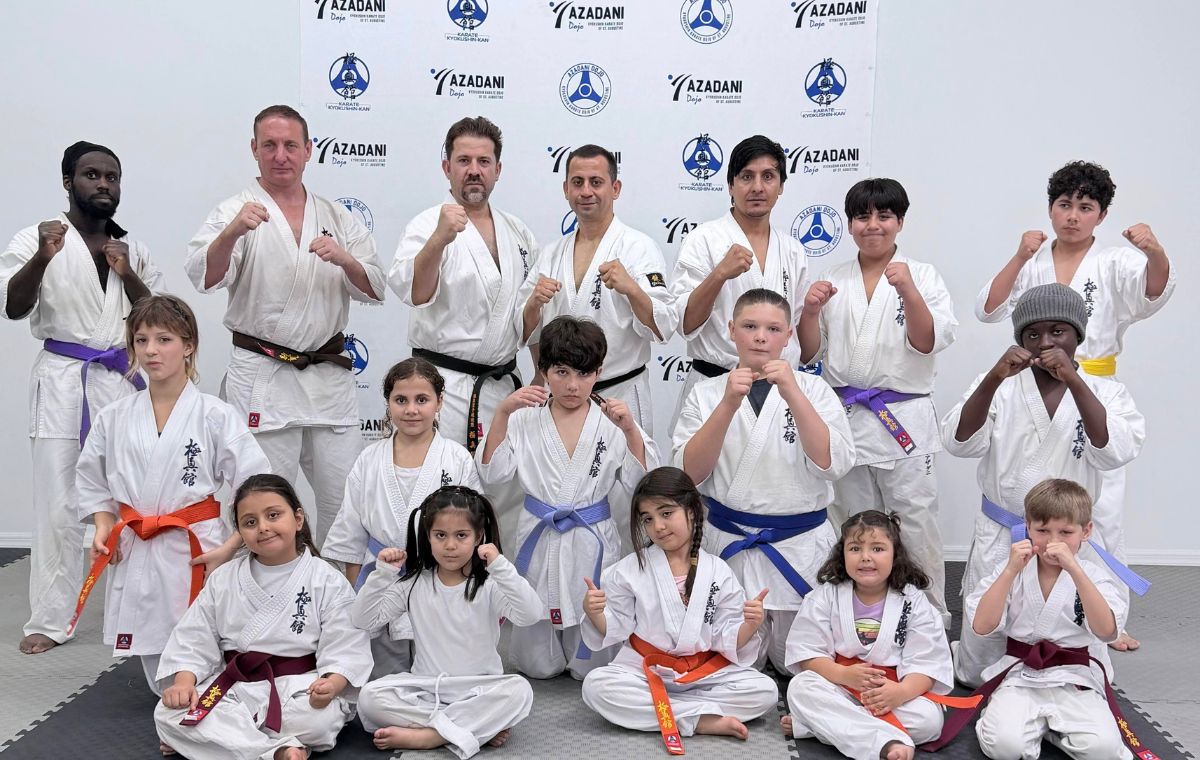
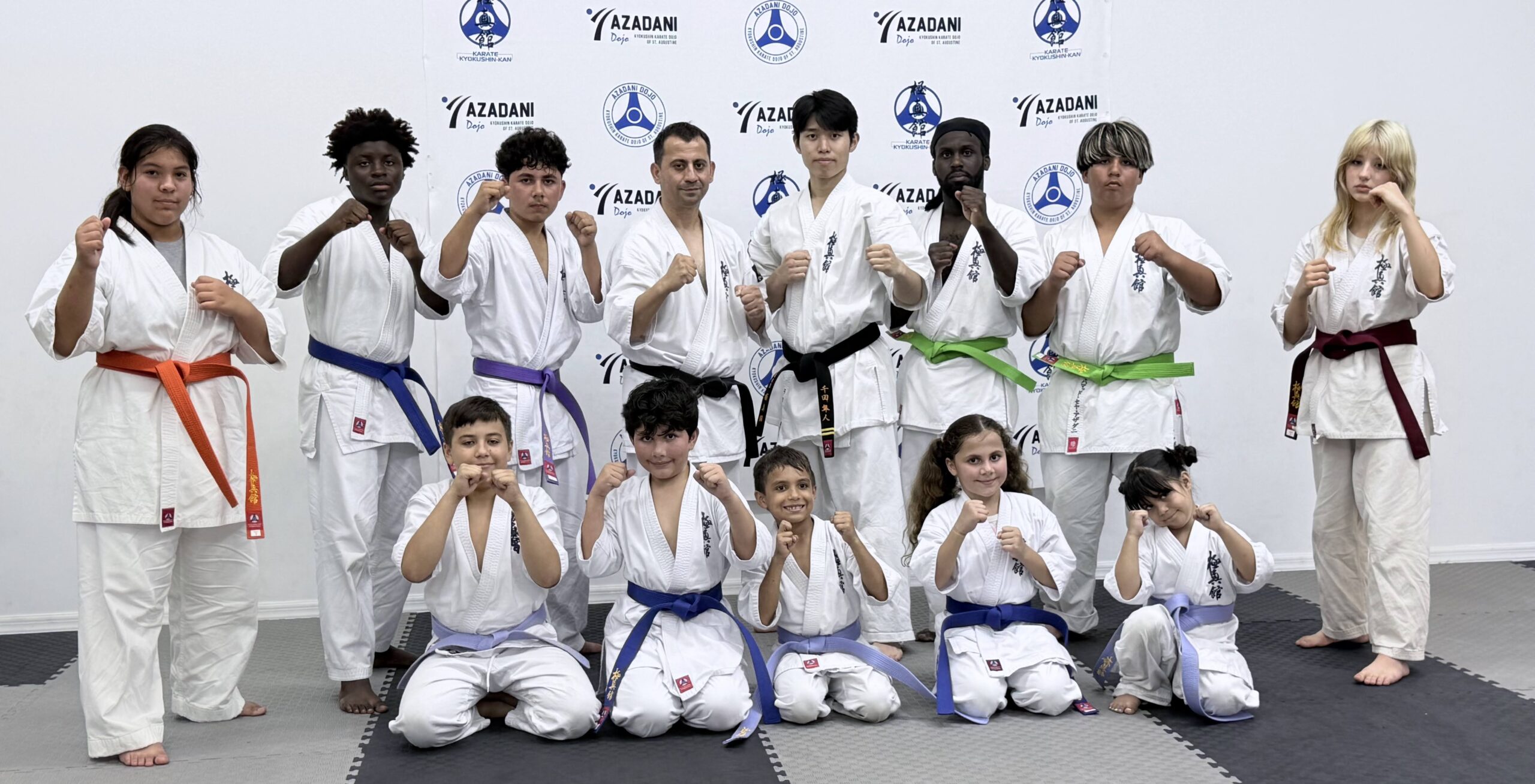
At Azadani Dojo in St. Augustine, women can join our adult karate classes and begin training at their own experience and fitness level. You can focus first on learning the basics, understanding your stance, becoming comfortable with the movements, and making it through that first class. From there, you simply keep learning.
Over time, the techniques become more familiar, your body becomes more capable, and things that once felt intimidating begin to feel normal. That’s how martial arts progress usually happens: not through one dramatic transformation, but through many small improvements that gradually add up.
And somewhere along the way, you may realize that the strength you originally came looking for isn’t only physical.