“I’ve always wanted to try karate… I just don’t know if I’m too old.”
Starting karate as an adult often begins with curiosity, followed by a long list of questions. You might have wanted to try martial arts for years but wondered whether you’re too old, too out of shape, or too inexperienced to feel comfortable in a class. Perhaps you picture yourself struggling to remember the movements while everyone around you knows exactly what to do. Those concerns can make taking the first step feel more intimidating than the training itself.
The reality of being a beginner is usually much more ordinary than the scene you’ve imagined. You meet the instructor, learn where to stand, and begin working through movements that are new to you. Some things feel unfamiliar, and you ask questions along the way. You’re there to learn, so nobody needs you to arrive with the skills you came to develop.
At Azadani Dojo in St. Augustine, Florida, adults can begin karate with different goals, including staying active, learning self-defense, or exploring an interest they’ve had for years. Whatever brings you to the dojo, understanding the beginner experience can help you approach it with more realistic expectations. If age is your main concern, our guide on whether you can start karate at any age explores that question in more detail.
You’re Usually More Aware of Your Mistakes Than Anyone Else
Before your first class, it’s easy to imagine that everyone will notice every movement you get wrong. You might worry about turning in the wrong direction, forgetting an instruction, or needing more time than the person beside you. Adults are often used to being capable and experienced in their everyday lives, so being visibly new at something can feel uncomfortable.
Once practice begins, however, other students have their own work to concentrate on. An experienced student may be refining a familiar technique, while another beginner is trying to remember the same instructions you are. Your instructor will pay attention to your movements because observing and correcting them is part of teaching. That attention gives you guidance about what to try next.
As you become familiar with the class, mistakes can start to feel less personal. You realize that a correction is useful information and that repeating a movement is a normal part of learning. You don’t have to hide the fact that you’re a beginner or apologize for needing an explanation. Asking questions helps you understand the lesson and gives your instructor a clearer idea of where you need support.
You Don’t Have to Get Fit Before You Start
Waiting until you’re fitter can seem like a sensible plan, especially if it has been a while since you exercised regularly. You may assume you should improve your stamina, become more flexible, or lose some weight before joining a class. The difficulty is that this can keep pushing an activity you’re interested in further into the future.
Beginner karate training starts with learning the fundamentals. You don’t need to arrive knowing how to perform a high kick or complete a complicated combination. Your initial focus is on understanding basic movements, becoming familiar with the class, and finding an appropriate pace. Discussing your current activity level and any physical limitations with the instructor helps establish a suitable starting point.
Progress also looks different from person to person. You might first notice that a stance feels more comfortable or that you can complete a drill with fewer pauses. Someone else may recognize improvement in their coordination before anything else. Giving yourself time to adapt is more useful than expecting your body to perform like an experienced student’s during the first few sessions.
If this concern has been holding you back, we explore it further in do you need to be fit to do karate?. Learning about the beginner approach can help you decide how to start without setting unnecessary conditions for yourself.
Karate Requires More Mental Attention Than You Might Expect
From the outside, karate can look like a series of physical movements. You see punches, kicks, blocks, and turns, but you don’t necessarily see the concentration involved in coordinating them. Once you begin practicing, you discover how much attention goes into remembering a sequence, maintaining your position, and responding to an instructor’s correction.
Sometimes the most useful adjustment is to slow down. A movement that feels confusing at full speed may become clearer when you practice one part at a time. You learn to notice details, tolerate a little frustration, and try again with a specific change in mind. These are practical learning habits that develop through the work of the class.
That mental challenge can be part of what keeps karate interesting. Even a basic technique offers something to investigate as your understanding grows. You may begin by concentrating on where your feet belong and later pay closer attention to timing or control. For parents interested in how younger students approach similar challenges, our article on mental toughness in kids and teens explores that side of training.
Being a Beginner Can Feel Surprisingly Refreshing
Adult life comes with plenty of situations where you’re expected to have answers. At work, people rely on your experience. At home, you may be the person who organizes plans, solves problems, and remembers what needs to happen next. Joining a karate class gives you a setting where someone else guides the lesson and you’re allowed to learn from the beginning.
That can take some getting used to. You might initially feel frustrated when something doesn’t make sense straight away, especially if you’re accustomed to learning quickly in other areas. Physical skills take repetition, and understanding an instruction doesn’t always mean your body can immediately carry it out. Giving yourself permission to need practice makes the experience more enjoyable.
Small achievements then become worth noticing. Remembering a sequence without looking around, understanding a correction, or completing a movement more smoothly can feel satisfying because you remember finding it difficult. You have a skill to work on for your own interest, with room to improve over time.
Class Gives You Something Different to Focus On
A typical day can involve switching between messages, deadlines, errands, and family responsibilities. Even when you have free time, your attention may stay occupied by unfinished tasks. Karate introduces an activity that asks you to engage directly with what you’re doing, whether that means following a demonstration or practicing a sequence.
During training, there are practical reasons to put your phone away and concentrate. You need to listen, observe, and apply instructions through movement. That change of focus can be an appealing part of the experience, particularly if you spend much of the day working at a screen or managing several things at once.
You won’t necessarily feel the same after every class. Some sessions may leave you pleased with your progress, while others may involve working through something frustrating. Even so, having a regular period devoted to learning and movement can become something you value in its own right.
Confidence Comes From Seeing Yourself Improve
Confidence in karate often begins with specific experiences. You try a technique that feels awkward, receive some guidance, and return to practice it again. Eventually, you notice that it feels more familiar. That improvement gives you evidence that you can work through a challenge, even when the first attempt doesn’t go well.
Over time, you may become more comfortable asking for help or trying something unfamiliar. You’ve had repeated opportunities to make mistakes without treating them as a final judgment of your ability. A difficult class becomes one part of the learning process rather than a reason to assume you aren’t suited to karate.
You don’t need to become especially outgoing or competitive to recognize this progress. Confidence might simply mean walking into class without worrying as much, volunteering to try a drill, or trusting yourself to remember a sequence. Those changes are personal, and they can matter just as much as a visible technical achievement.
The Dojo Can Become a Familiar Part of Your Week
You may join karate primarily for the activity and discover that you also enjoy the people you train with. Seeing the same faces regularly creates opportunities for conversation without needing to organize a separate social event. A short exchange before class or some encouragement during practice can gradually make the environment feel familiar.
Training together also gives people something in common. You understand the effort behind another student’s improvement because you’ve experienced your own challenges. When someone remembers a sequence they’ve struggled with or earns a new belt, you can appreciate what went into that progress.
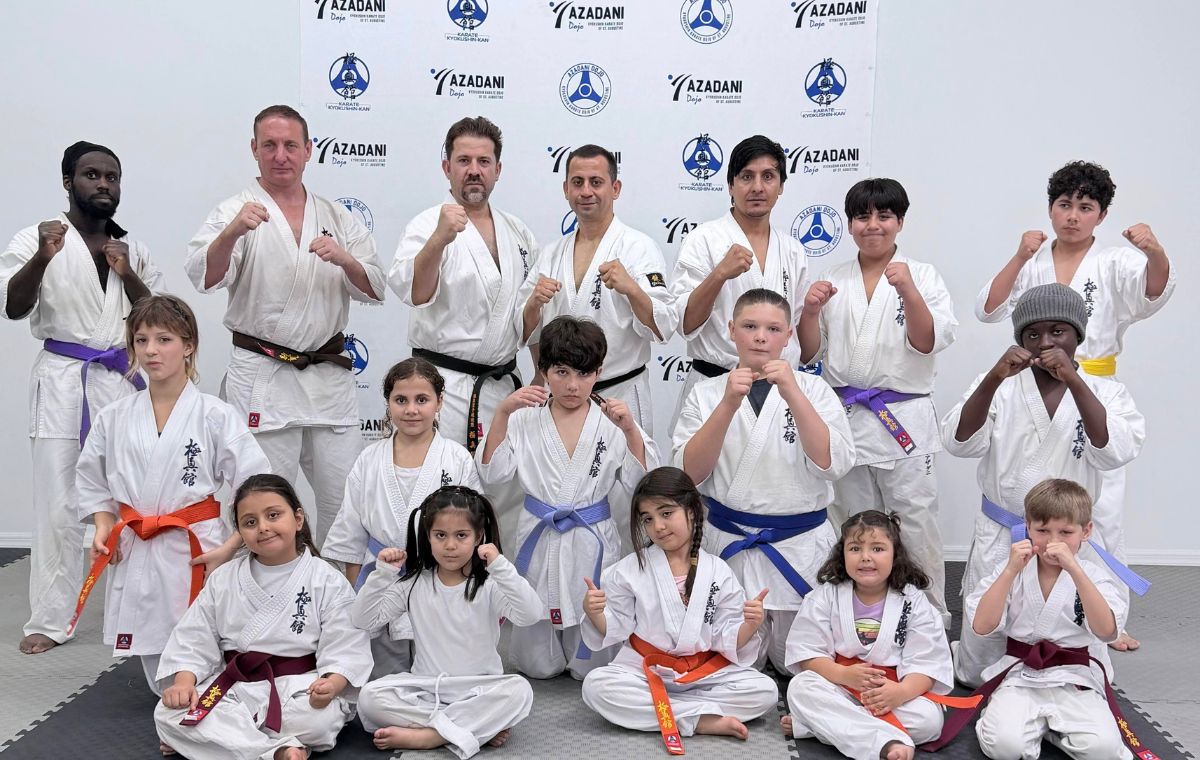
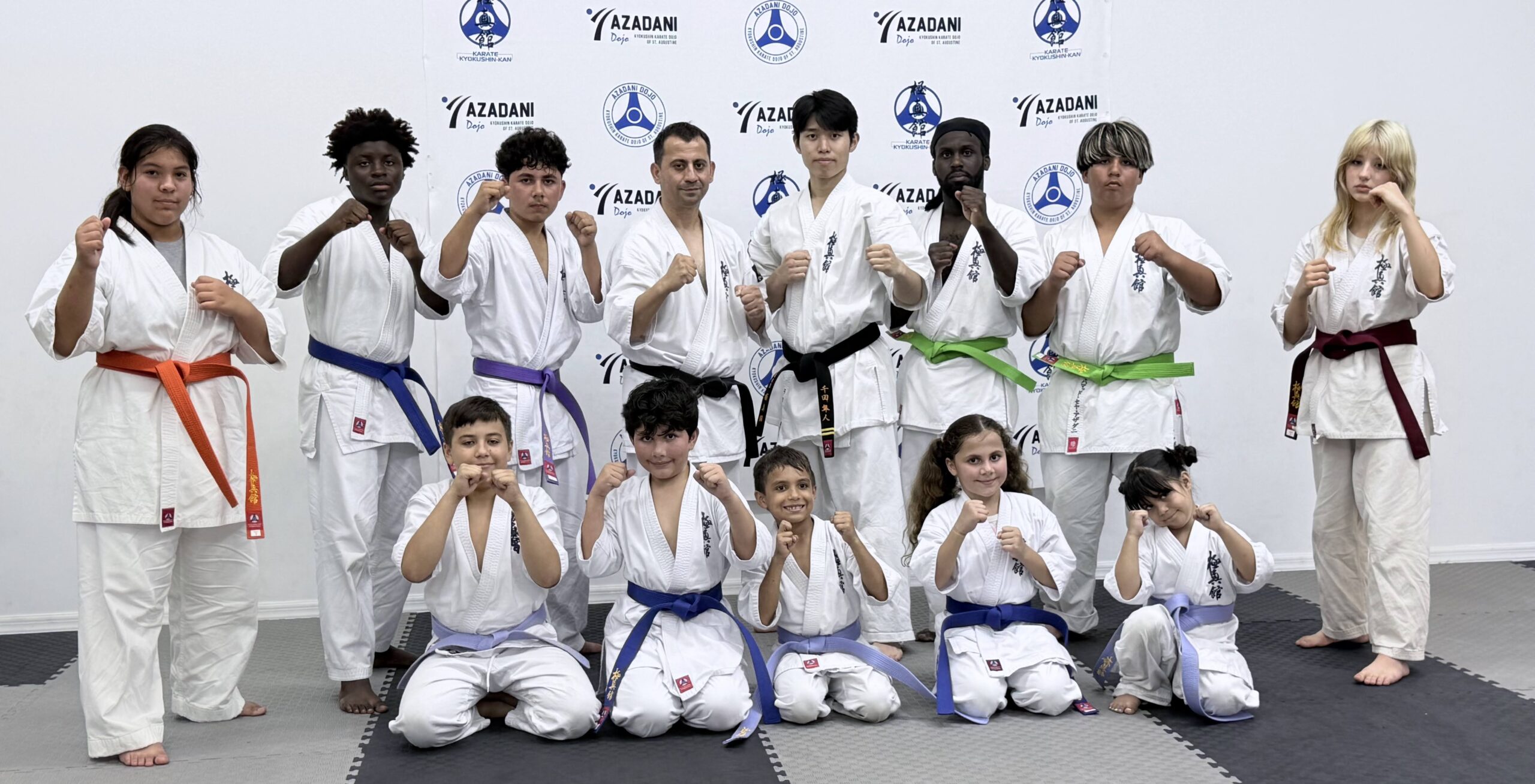
At Azadani Dojo, shared practice gives adults an opportunity to become part of a training community while working toward individual goals. You can enjoy that connection whether you’re naturally talkative or prefer to concentrate quietly. Simply knowing the routine and recognizing your training partners can make returning to class feel easier.
Progress Takes Time, Which Makes It Meaningful
Karate asks you to stay with skills that don’t develop immediately. You may understand what a movement should look like before you can perform it comfortably, and you may need the same correction more than once. That can be frustrating when you’re putting in effort and hoping for a quick result.
Improvement often becomes visible through small changes. You keep your balance more consistently, remember the order of a kata, or need less time to organize your movements. These developments may seem modest in isolation, but they build on one another and give you a clearer sense of what regular practice is doing.
It helps to recognize that progress won’t always follow a predictable schedule. Some techniques will feel natural sooner than others, and a busy period may affect how often you can attend. A sustainable routine and a willingness to keep learning give you a more useful foundation than comparing yourself against a fixed timeline.
You Learn to Measure Progress Against Your Own Starting Point
Looking around the room is natural when you’re new. You notice the student who moves smoothly, the person who seems to remember every instruction, or the experienced practitioner performing a kata with confidence. What you can’t see immediately is how much practice sits behind those abilities.
As you gain experience, it becomes more useful to compare your current skills with where you began. Perhaps you understand the class instructions more easily or no longer need to stop midway through a familiar combination. These observations help you recognize improvement that might otherwise disappear beneath comparisons with more experienced students.
Other students can still provide inspiration and useful examples. Watching someone perform a technique well can help you understand what you’re practicing. The key is remembering that their experience and your starting point are different, so their progress doesn’t set the deadline for yours.
You Can Begin Without Waiting for Everything to Feel Perfect
There may be practical reasons why starting now is difficult, and finding a workable schedule matters. However, waiting until you feel completely confident or life becomes permanently less busy can keep you postponing something you’d like to try. You can gather information and explore a class while still having questions.
A manageable first step might be contacting the dojo, asking about beginner participation, and finding out what to expect. You can discuss the schedule, what to wear, and any concerns about your experience or abilities. Those details help replace an imagined situation with something concrete.
Choosing the right environment also matters. You want clear instruction, respectful communication, and a class where questions are welcome. If you’re still comparing options, our guide to choosing a karate school in St. Augustine explains what to look for before deciding.
Taking Your First Step at Azadani Dojo
Starting karate as an adult gives you an opportunity to explore a physical skill without needing to decide immediately how far you want to take it. You might be interested in fitness, self-defense, traditional martial arts, or simply having an activity that belongs to you. Those are all starting points you can discuss with your instructor as you become familiar with training.
At Azadani Dojo in St. Augustine, Florida, beginners can start by learning the fundamentals and developing their understanding through practice. Your first goal can be as straightforward as attending, asking questions, and getting a feel for the class. You can then decide whether the instruction, atmosphere, and routine fit what you’re looking for.
Explore our karate classes in St. Augustine to learn more about the available programs. Taking that first step gives you a chance to experience karate for yourself and find out which parts of training you enjoy most.